Here in our tenth and final Rant on the top ten industrial energy-saving foci, I assess and summarize opportunities in advanced process controls, real-time optimization, digital twins, and artificial intelligence. I would say that advanced controls and AI are to process energy savings as onsite solar power is to energy efficiency. Deploy strategies one through nine first, and fine-tune with AI and digital twins for the last few percentage points of savings opportunity.
Deploying advanced controls starts with monitoring everything possible in a production facility. A cost-effective and reliable way to deliver industrial data is via LoRaWAN. A LoRaWAN, which stands for Long Range Wide Area Network, is a wireless communication system designed to connect large numbers of sensors and devices over long distances while consuming very little power. The network consists of battery-powered sensors that transmit small amounts of data to gateways, which collect data from multiple sensors and relay the information to cloud-based software platforms for analysis and monitoring. Connected devices include temperature sensors, occupancy sensors, utility meters, vibration monitors, flow rates, valve positions, and electrical current, voltage, power factor, and power. Since the sensors can operate for years on a single battery and communicate over hundreds or even thousands of feet, LoRaWAN provides a cost-effective way to collect large volumes of operating data for managing energy consumption, predictive maintenance, and digital twin applications.
A digital twin is a sexy name for something we’ve used for decades. It’s not unlike a regression model with the key variables used to predict energy consumption under various scenarios of production rates, outdoor air conditions, and other parameters. However, like artificial intelligence itself, a digital twin swallows vaster (I didn’t know that was a word) quantities of data, more sources of data, and grinds the numbers in loathed data centers that no one wants in their back yards.
Simulators Vs. Digital Twins
A digital twin is also not unlike a building simulation program such as DOE-2, EnergyPlus, Trane Trace, or Carrier’s Hourly Analysis Program. However, unlike those systems that are built and calibrated once, used, and set aside. Chat summarizes the differences as follows:
A building simulation model is typically:
- Built once (design phase or retrofit analysis)
- Based on assumptions (schedules, loads, weather files)
- Run offline and periodically updated (if ever)
- Used for what-if analysis (e.g., “what happens if I add insulation or change setpoints?”)
A digital twin is:
- Continuously connected to the actual building via sensors/BAS
- Updated in near real time with operating data
- Calibrated dynamically (not just once)
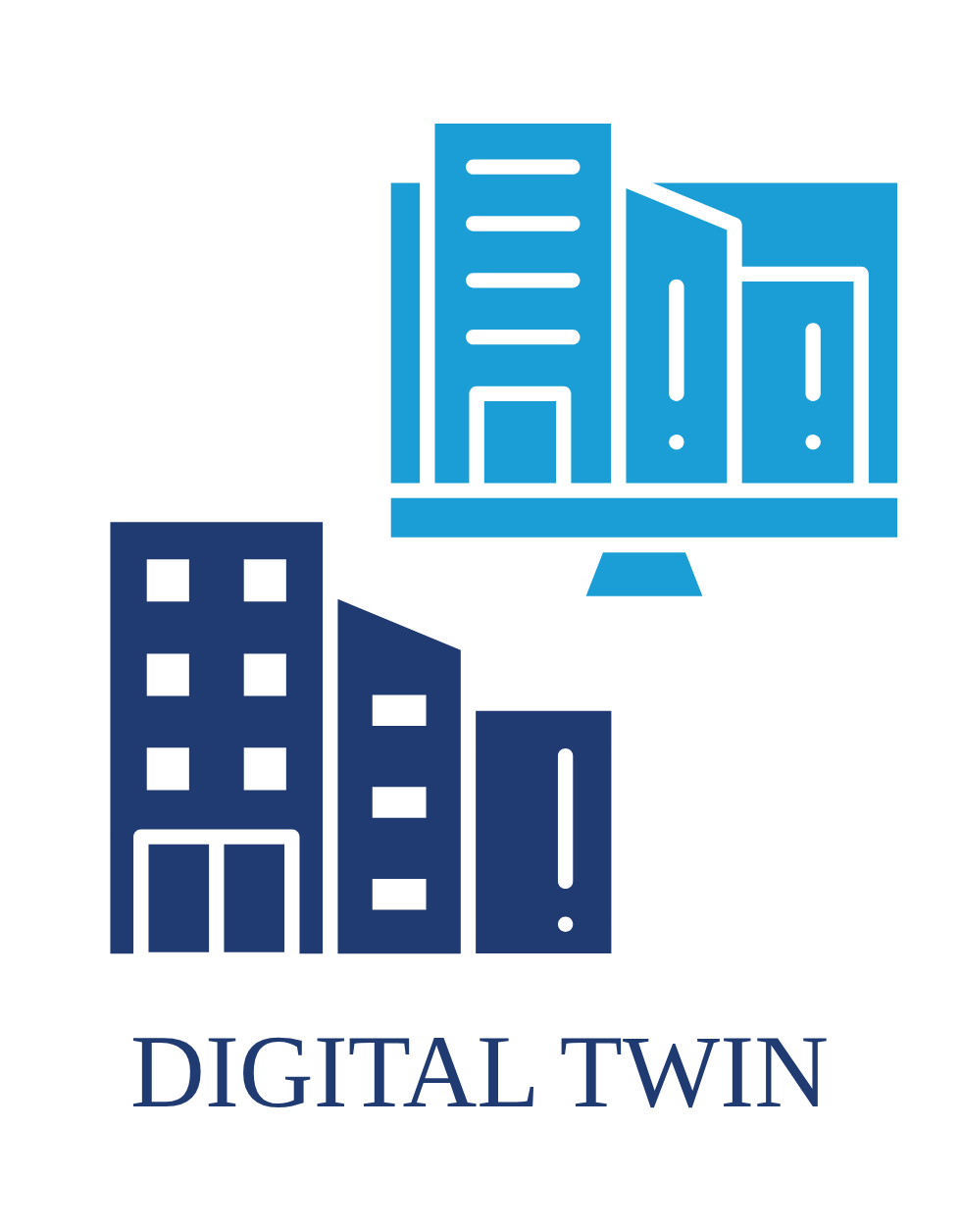 Used for ongoing optimization, fault detection, and control
Like the term “DERMS” (distributed energy resource management system), “digital twin” is often overused and its capabilities overblown. They are often poorly calibrated models with dashboards and trend data bolted on.
As I read up on digital twins, good ones should effectively support continuous commissioning, in real time, keeping processes and manufacturing lines running in tiptop shape. I.e., for a given set of macro-operating parameters – weather, production rates, time of day, day of week, etc., the production line should be using xx kW.
Gamification
As the plant energy manager moves through time, they make it their mission to continuously reduce kW for a given set of operating parameters – through continuous commissioning, improvement, and optimization. I’d call this gamification. Like running for a given set of conditions, minus ten degrees or 85 degrees with high humidity, and a given course, what’s my time? Can I beat the time I ran in the last set of similar conditions? This is an engaging endeavor if you are a competitive creature.
A true digital twin can do things traditional models struggle with:
- Continuous commissioning (detecting drift, stuck valves and dampers, malfunctioning sensors)
- Real-time optimization, e.g.,
- Chiller and refrigeration compressor staging,
- Variable speed drive optimization of pumps, fans, coupled with compressor power – total system optimization,
- Thermal storage dispatch, and
- DERMS dispatch.
- Operator decision support using current conditions, rather than typical/”average” weather
- Learning system behavior over time instead of relying on assumptions
Summary
Summarizing AI’s cynical perspective, as I noted above, a well-maintained, functional control and data-collection system paired with a fanatical energy manager will achieve 90% of the savings and load minimization potential. A functional digital twin will help with the remaining 10%, but not without the fanatical manager. The digital twin brings speed of delivery and repair to the equation.
Stuff changes: products, equipment, configurations, control sequences, and so forth. Artificial intelligence can keep the wheels on in a static operating system with changing variables noted above (production rates, weather, etc.). A human needs to intervene when the system changes, as non-routine events enter the equation.
The core reality is that the greatest leverage for minimizing capacity (demand) and energy consumption in buildings and manufacturing facilities comes from:
- Recognizing and fixing obvious control issues,
- Proper commissioning and continuous commissioning, aka continuous improvement and optimization, and
- Competent operations
A digital twin can help with those, but it doesn’t replace them.