In this week’s post on industrial efficiency, we are finishing out measure family number seven: process heating. Last week, we covered low and medium-temperature process heating, from heat pumps to natural gas boilers. This week, we’re rounding it out with electrification and ingenious methods to reduce heating loads.
WPUI Promo
The rest of the content in this post can be absorbed in an interactive 3D format, better than any AI, at the Wisconsin Public Utilities Institute’s Energy Utility Basics 2026. It’s a perennial sellout, so book ‘em now, Dan-O. I was just confirmed for 2:00 PM CDT, Thursday, October 8, 2026. Don’t be late!
Induction Heating to High Temperatures
Per last week, electricity can be the fuel of choice for low-temperature applications using heat pumps. High-temperature applications, including red (1,400F), yellow (1,900F), and white (2,200F) steel, offer opportunities for electrification. There are two reasons for this: standby losses and nitrogen.
Steel mills that produce wire rod roll billets that start out as 5-inch square by 40-foot hulks of steel. To start the rolling process, they are heated to 2,100F blazing yellow in a reheat furnace, as shown in Figure 1, exiting longitudinally. From there, the process begins with rounding and diameter reduction.
Figure 1 Billet Set for Rolling
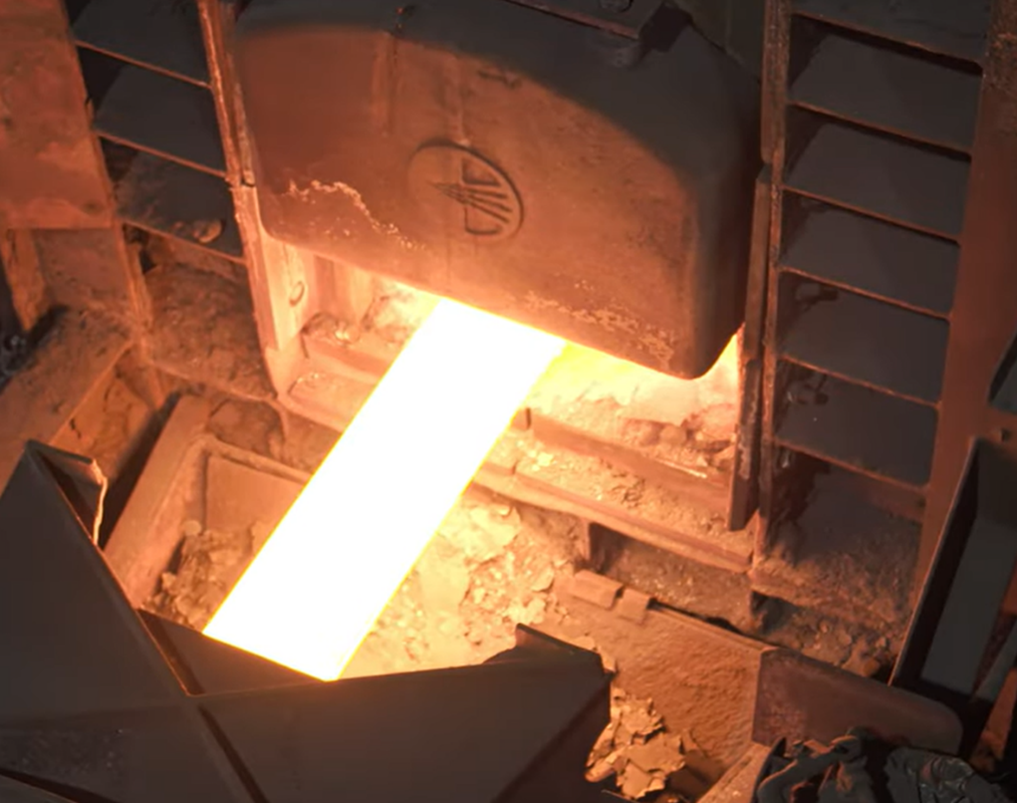
Reheat furnaces are fueled by natural gas, blasting hot combustion gases around 3,000F to heat the billets, and the massive reheat furnace and all the refractory that maintain structural integrity and reduce heat loss. There are enormous heat losses to the shell and heating the nitrogen (~79% of air) that goes along for the ride in the combustion process. Did I mention it takes about 90 minutes of soaking in the furnace to reach temperature uniformity?
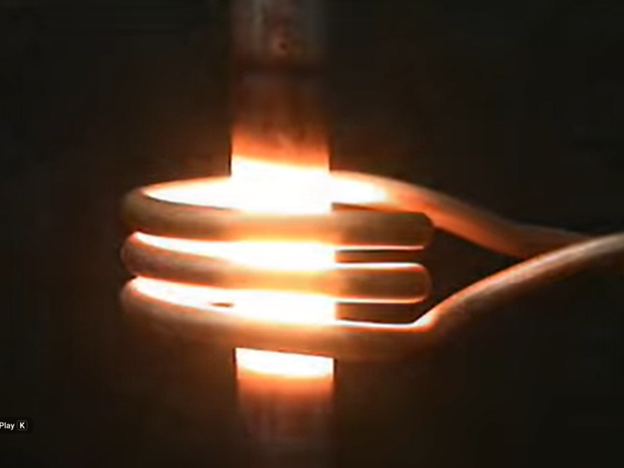
Instead, induction heating can use electricity to heat these five-ton hulks of iron. The only air heated in the induction process is heat from the billet itself. The process introduces a current in the billet, or any ferrous[1] material, which causes it to heat up since it is a poor conductor of electricity. It is also fast, precise, and delivers more uniform heating. See the video in Figure 2 for a nice visual of the speed and lack of standby heat losses.
Figure 2 Induction Heating Demonstration
Numerous companies provide induction heat for large billets in rolling mills. However, induction heating is not limited to five-ton billets. We have seen natural gas/air blasting many types of metallurgical heat treatment processes (it’s been a while, so don’t ask). Induction heating also works for a wide range of smaller heating treatment applications.
Targeted Electric Heating
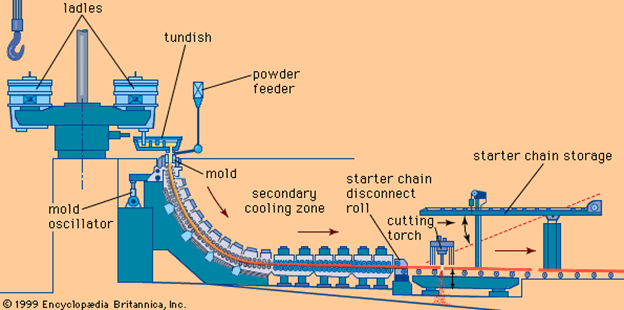
Other steel mill applications include heating ladles and tundishes, which are illustrated in Figure 3. These vessels are kept white-hot while on standby, ready to be put to use. Again, they are typically blasted with exhaust gases of oxidized natural gas to keep them hot, heating tons and tons of nitrogen with no value added. Instead of heating air, electricity can be used to target only the load, not the ambient air or surroundings.
Figure 3 Continuous Casting Process
Several manufacturers provide electric ladle and tundish heating systems.
The message of this Rant post is not to focus solely on steelmaking. The message is to think big and to say, “There must be a better way.”
Reducing Heating Loads Through Dewatering
My last electrification recommendation covers dewatering for dehydration and concentration of food products, as well as for dewatering emulsified cutting and lubrication fluids in metal fabrication. Here is a list of ten applications for efficient dewatering provided by Chat:
- Dairy processing — concentrating milk into evaporated milk, condensed milk, whey concentrate, and powdered milk products.
- Food and beverage processing — concentrating juices, coffee extracts, tomato paste, soups, sauces, and flavorings.
- Maple syrup production — evaporating water from maple sap before final finishing.
- Pulp and paper mills — black liquor concentration and removal of water from pulp-processing streams.
- Wastewater treatment — concentrating sludge and reducing disposal volume for industrial and municipal systems.
- Chemical manufacturing — concentrating chemical solutions, salts, caustics, solvents, and intermediates.
- Pharmaceutical manufacturing — solvent recovery and concentration of process streams and active ingredients.
- Metalworking and fabrication — removing water from emulsified metalworking fluids, coolants, and rinse streams.
- Mining and mineral processing — concentrating slurries, tailings, brines, and leach solutions.
- Biofuels and ethanol production — concentrating stillage and recovering water and usable byproducts from fermentation streams.
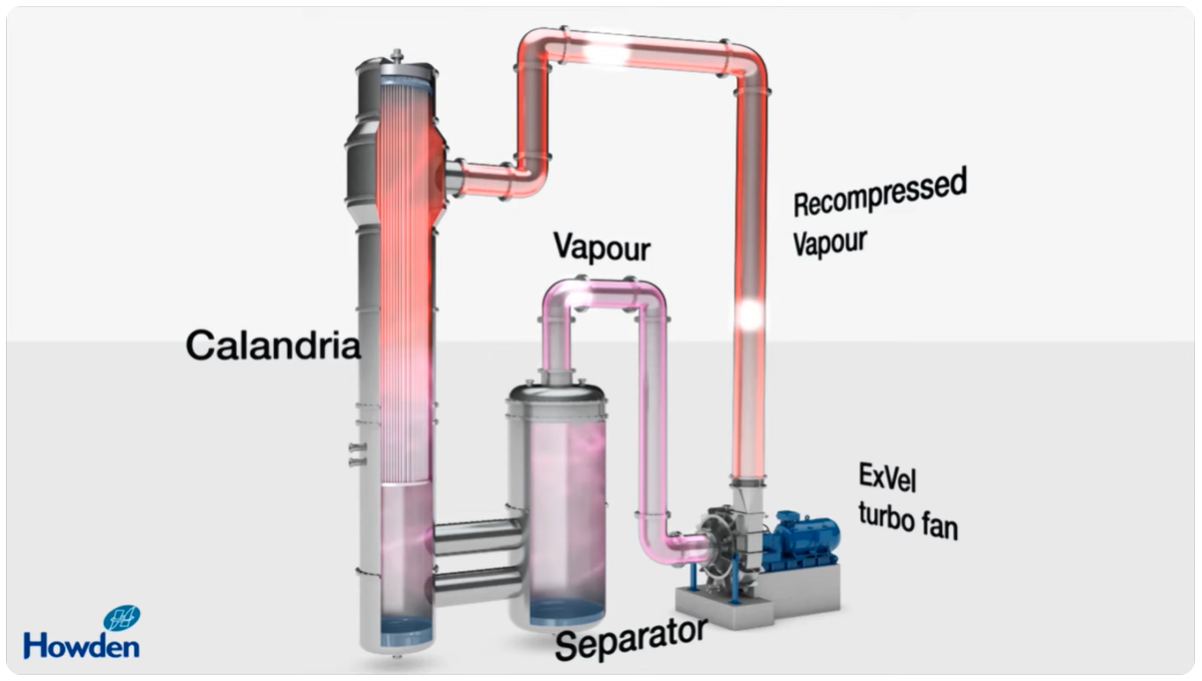
To improve dewatering efficiency, reduce pressure on the feedstock using mechanical vapor recompression, leveraging water’s property that it boils at lower temperatures as pressure drops. For example, water boils just above 32F at a perfect vacuum, or zero absolute pressure. Figure 4 provides a cartoon and video of the process, which is ingenious.
The only energy used in the process is the compressor (or turbofan) shown in the cartoon. The turbofan draws a vacuum on the calandria, where the feedstock is heated by the compression of water vapor that is boiled off the feedstock. The calandria is a shell-and-tube heat exchanger with product on the tube side and compressed water vapor on the shell side. There is no external heat added in this process. Amazing!
Figure 4 Mechanical Vapor Recompression
Think Bigger About Process Heating
The name of the game from this post is think big for process heating. Sometimes it’s recognizing waste and thinking there must be a better way! In other cases, it’s about applying off-the-shelf packaged technologies. In both cases, the secondary benefits of speed and eliminating bottlenecks may outweigh the energy savings.
[1] Iron.