
Demand management enables flexible grids,
stronger communities.
Creating flexible capacity grids is more than just having the right infrastructure–it takes the right outreach, the right education, and, most of all, a human approach to engaging your customers. At Michaels Energy, we’re skilled in targeting the missing middle: those customers who are difficult to reach, or might not otherwise sign onto a demand management or response program. And we have the expertise and proven process to back it up.
What is Demand Management?
Every grid has to balance two things: how much power is available, and how much everyone wants to use at the same time. Demand management is the umbrella term for all the strategies utilities use to keep demand from exceeding supply.
Commercial & Industrial Demand Response
One such Demand Management strategy often used by utilities is Demand Response. If you run a commercial or industrial facility, demand response participation goes straight to your bottom line. But like any strategy, it’s worth understanding what you’re signing up for on both sides of the ledger.
What is Demand Response?
Demand Response is a practical, in-the-moment version of demand management. Here’s how it actually works:

Events
Events
When the grid needs a little help, the electric utility will call an "event" — a window of time where participants reduce or shift their usage. You'll typically get advance notice so there's no last-minute scramble, and events are usually called only during periods of real grid stress, like extreme heat or cold.

Enrollment
Incentives
Signing up is simpler than most people expect. If your facility can shift or trim usage during key hours — think adjusting or shutting off HVAC, lighting, or equipment for a few hours — you're likely a good fit. We handle the assessment, give you an easy-to-follow action plan, walk you through the details, and get you enrolled without the runaround.

Incentives
Incentives
Participants are paid for playing their part, and there are generally two ways that happens: capacity payments, which reward you for being ready to reduce usage when called upon, and energy payments, which reward you for the actual reduction during an event. Either way, showing up pays off.

Measurement
Measurement
Once an event wraps up, we verify exactly how much you reduced — this is where our Energy Measurement & Verification expertise comes in, making sure participants are credited accurately and utilities can trust the numbers.
What You Gain
- New revenue, with minimal build-out. Most facilities already have the equipment needed to participate, so no major capital investment required.
- Lower energy costs. Beyond incentive payments, shifting usage away from peak periods can reduce demand charges on your utility bill.
- A resiliency dry run. Participating in DR events is a low-stakes way to stress-test your facility’s flexibility — useful knowledge to have before an actual emergency forces the issue.
- Sustainability wins you can point to. DR participation supports grid reliability and reduces reliance on the dirtiest, most expensive “peaker” power plants, a data point that looks good in your ESG reporting.
What It Costs You Operationally
Nothing’s free, and DR is no exception. Participating means:
- Some amount of planning and coordination, especially for manual (non-automated) programs. We can help with this!
- Temporary adjustments to normal operations during event windows. If done right operational impacts should be minor, but not always completely inconsequential. We’ll help you identify those tradeoffs and balance costs and benefits.
- Internal buy-in and communication, since staff or decision makers need to know what’s happening when an event is called.

When DR isn’t the right fit
We’d rather tell you now than have you find out the hard way:
- If your operations are highly interruption-sensitive. The downsides and risks of tweaking certain manufacturing lines, environments (e.g. critical healthcare spaces), or processes with super tight temperature/humidity tolerances.
- If the incentive doesn’t outweigh the hassle. For smaller facilities, the payout may not be worth the coordination effort. Sometimes there’s more to be gained by pursuing an energy efficiency project instead.
Cold Storage Example
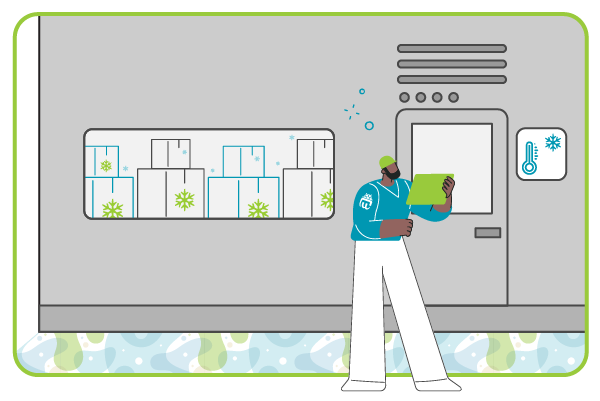
Cold storage is one of the facility types that works great for DR, and it’s a great example of why: refrigerated space has thermal mass, meaning it can coast for a while without active cooling. That’s the whole idea behind thermal energy storage systems like our IceRack™ system — building ice-based cooling capacity during off-peak hours, then leaning on that stored cooling capacity instead of the compressor during a DR event, power outage, or equipment failure.
Why Michaels Energy?

Industry know-how: our team is experienced in giving customer realistic and actionable plans.

A track record of success in working with customers to get all the benefits of their utility’s programs.

We can meet you where you’re at. Never participated in a utility program? No problem! Let’s get you started with the right offering. An old pro at working with your utility? Great! Let’s expand that relationship.
Take control of your energy demand
We’re here to help you take the first steps in strengthening your grid capacity and building resiliency in your facility.
Frequently Asked Questions
What qualifies a facility for a demand response program?
The bar is lower than most people think. If your facility can shift or reduce its energy use during certain hours (think adjusting HVAC, lighting, or equipment schedules), you’re likely a candidate. We’ll walk you through a quick assessment to confirm eligibility and figure out your best fit.
How much can a participant earn?
Earnings vary based on how much capacity you can offer and what your electric utility offers, but participants are typically compensated through incentive payments for their committed capacity. Even modest, low-effort adjustments can add up to meaningful savings over time.
How often are demand response events called?
It depends on the utility and the season, but events are typically called only a handful of times a year — usually during periods of high grid stress, like extreme heat or cold. Your utility will give you advance notice and we’ll help you develop a plan for these events so there’s no scrambling.
What is automated demand response?
Automated Demand Response (ADR) takes the manual work out of the equation — instead of someone flipping switches when an event is called, pre-set technology automatically adjusts your systems in real time. It’s like putting your response on autopilot: faster, more reliable, and one less thing for your team to worry about during a busy event window. This may be an option for buildings with an existing Building Management System or Energy Management System.
What is the difference between demand management and energy efficiency?
They’re teammates, not twins. Energy efficiency is about permanently using less energy overall (think upgraded lighting or better insulation), while demand management is about strategically shifting when you use energy — especially during peak demand. Both save money and support the grid, just on different playing fields.